
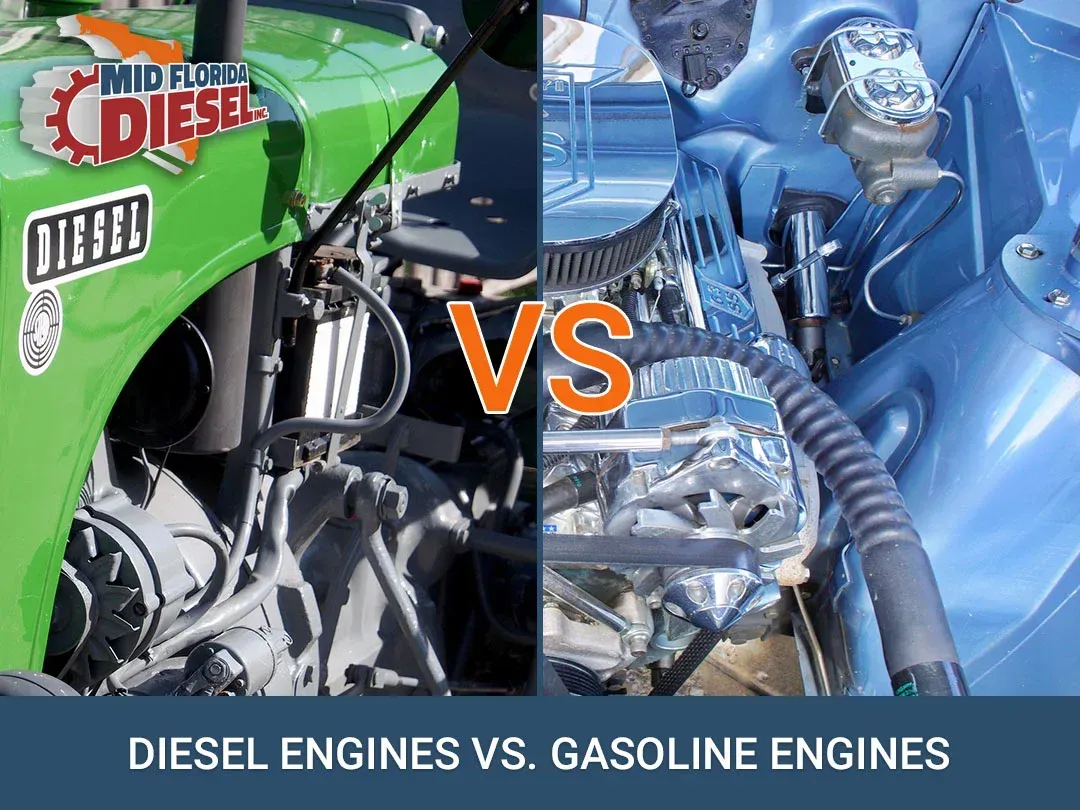
Diesel Engines VS. Gasoline Engines
October 10, 2023

October 10, 2023

Gasoline and Diesel are both petroleum products. Although they come from the same origin, they will have a lot of differences in their utilization. Diesel is usually utilized for bigger machinery that needs greater torque over HP. Gasoline, in comparison with this, is a lighter fuel and is used for vehicles that require speed rather than brute strength. But keep in mind that the difference between these two fuels is not limited just to torque and power figures. Both these products are refined out of crude oil. Here are some factors to consider.

Volatility and Density: Gasoline is better refined than compared to diesel. It also means that gasoline is thinner in terms of volatility and density. Therefore, in practice, gasoline burns quicker and allows you to develop greater horsepower. As the diesel fuel is thicker in terms of density, it also evaporates slowly. Diesel has greater energy density. This also means almost 20% more energy is developed from using diesel than the same quantity of gasoline. This is the reason why diesel engines are preferred for bigger machines, as they develop more energy at lower RPMs.

Durability: Generally speaking, diesel engines are thought of as more durable than compared to petroleum power plants. This is the reason why we usually see several diesel work trucks. Diesel engines can work for several miles compared to gasoline engines before they need repair and maintenance. The life expectancy of a diesel engine is close to 250000 to 300000 miles. None of the petroleum engines can offer this mileage. The reason behind this mileage is a huge difference in fuel type and engine design.

Engine Design: The diesel engines are huge and come with bigger cylinders, stronger pistons, multiple gears, and bigger crankshafts. They are usually straightforward and use fundamental gear operation. Some heavy-duty material is used for supporting constant operation. As the gears of the diesel engine are fixed, in most cases in a set area, there is restricted movement available for less wear and tear. The gasoline engines are more complicated and work on belts and chains. These engines use many smaller parts which need greater precision.

Fuel Efficiency: Another huge difference between gasoline and diesel fuels is their fuel efficiency. In most cases, diesel vehicles are more fuel-efficient than gasoline vehicles because of the thicker density it offers, together with a better compression ratio and lower RPM performance. Both these engines might have the same power, but the diesel engines have lower RPM. In other words, the diesel engines burn less fuel for the same output. A higher compression ratio means better fuel burning, and a greater amount of energy is produced.

When it comes to choosing between gasoline and diesel engines, both have their own unique advantages. If you drive less than 12000 miles per year on a regular basis, then a gasoline engine will be sufficient for your needs. However, if you plan on driving more than 15000 miles per year or towing heavy loads, then a diesel engine would be a more practical choice. If you live near Mid Florida, a great place for all your diesel requirements is Mid Florida Diesel.

Picture Credit: Pexels, Unsplash

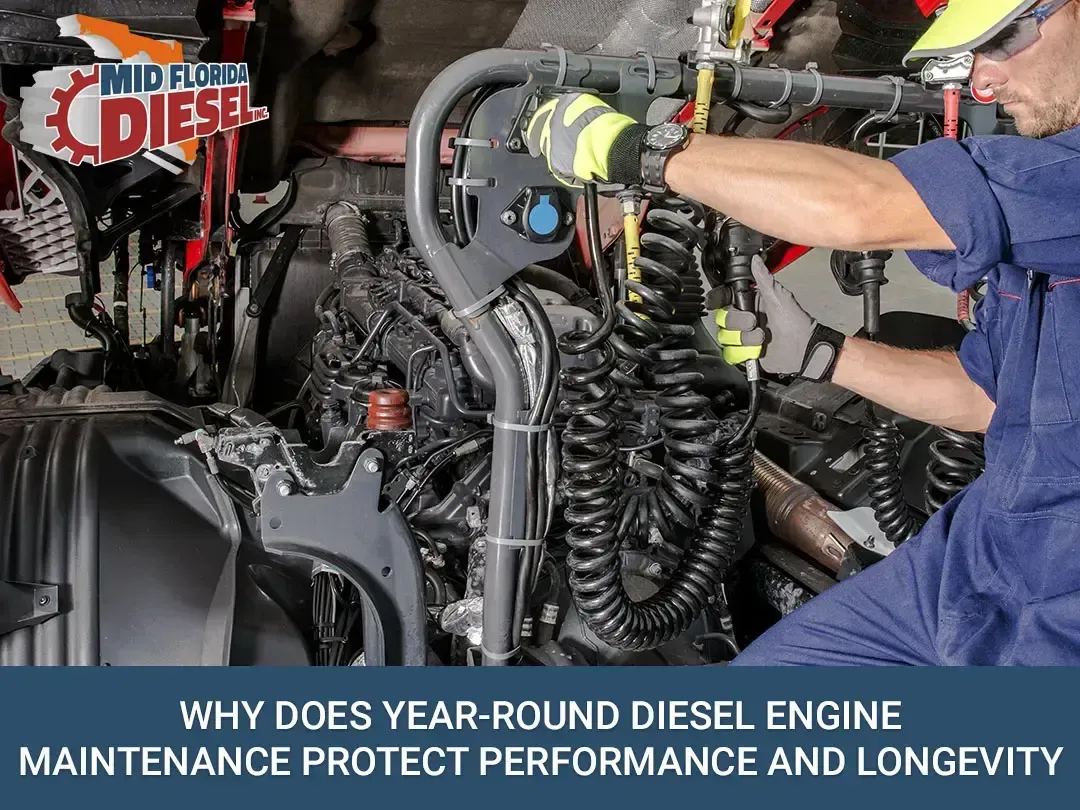
Technician servicing a diesel engine with hoses and tools in a workshop, with “Why does year-round diesel engine maintenance matter?” text.
August 2, 2026
One of the best investments that a business can make is a well-maintained diesel engine. Routine service helps maximize performance and reduce the risk of unexpected breakdowns, whether on commercial trucks, heavy equipment, generators, marine vessels, or industrial machinery. Demanding weather conditions, high humidity, and heavy workloads all create stress on diesel-powered equipment year-round across Florida. Thus, diesel engine maintenance should never be considered seasonal. But...

Commercial building with rooftop solar panels and a white diesel generator, under a blue sky.
July 19, 2026
As renewable energy increases, many believe traditional power systems will become obsolete. In fact, the future of sustainable energy depends on balancing renewable generation with reliable backup power. When renewable sources are insufficient to meet demand, a diesel generator remains an important source of reliable electricity. Diesel generators are critical in Florida to maintain business continuity during severe weather, grid outages, and peak electrical demand for businesses, healthcare...

White standby diesel generator on a platform outdoors, with a “Midwest Diesel” logo and caption.
July 6, 2026
Power outages have many causes, including extreme weather, utility failures, equipment problems, and increasing demand on the electrical grid. Hurricanes, tropical storms , and seasonal weather events are a regular concern in Florida, and many property owners are now considering backup power options more seriously. One solution that continues to attract attention is the standby diesel generator. Since the time this topic was first discussed, power reliability has become an even greater...

Show More →